Buying In Admirals Cove: Key Factors To Evaluate
If you are considering a home in Admirals Cove, you already know the draw: world-class boating, golf, and a true club lifestyle in Jupiter. The question is how to buy smart in a community with canals, docks, ADR rules, and membership timelines. In this guide, you will learn the practical checks that protect your purchase, from dock limits and flood insurance to membership steps and renovation approvals. Let’s dive in.
Admirals Cove is a private, gated waterfront and golf community with a full-service club, marina, spa, and racquet facilities. The Club highlights 45 holes of golf, a private marina, dining, and social programming for members. You can preview the lifestyle and amenities on the Club’s site under club amenities.
Two entities guide your ownership. The Master Property Owners Association (MPOA) manages community governance, Architectural Design Review (ADR), docks, and sales processing, while The Club manages membership, golf, marina operations, and dining. Sources can differ on acreage and sub-association details, so confirm specifics in the MPOA sales packet and community documents available through the MPOA.
For boaters, the on-site marina offers fuel, shore power, and quick access to the Jupiter Inlet. You can see approach notes and facilities in the marina directory summary, and explore the Club’s overview of marina amenities. Always verify current slip counts, depths, and procedures with the Dockmaster before you finalize plans.
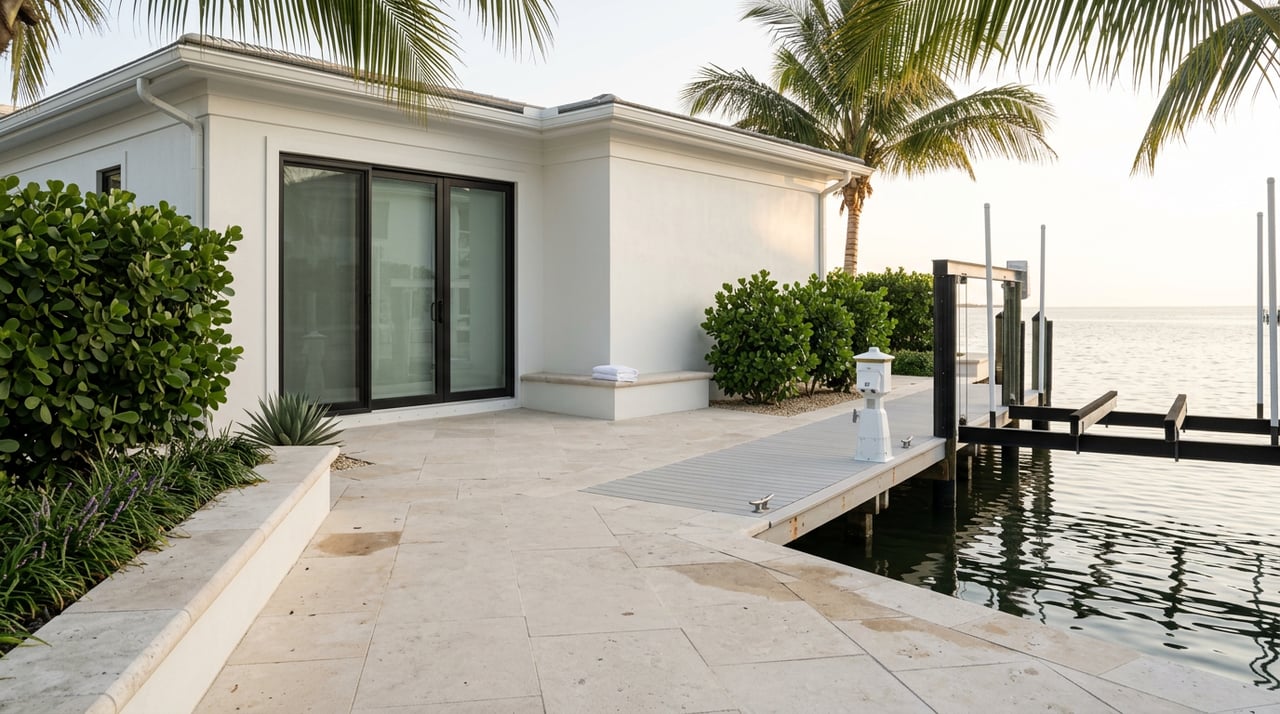
If a home includes a dock, you are responsible for maintenance and safety. The MPOA publishes lighting and usage rules, and it requires vessel transponders for entry on Admirals Cove waterways, including for jet skis. Ask the seller to provide the property’s Dock License Agreement, any as-built dock drawings, and active transponder information. You can review rules and owner responsibilities on the MPOA’s docks page.
Boat length at a given lot depends on lot width, waterway depth and navigability, setbacks, and any sub-association rules. The MPOA publishes guidelines by home type, and some sub-associations add their own limits. If you have a specific vessel in mind, confirm your boat’s fit against the MPOA formula and sub-association standards before you remove contingencies. Start with the MPOA’s dock guidance and then verify with the association and the Dockmaster.
Admirals Cove’s marina provides diesel and gasoline, single and three-phase shore power up to 480 V, and staffed services. Club materials note proximity of roughly two miles to the Jupiter Inlet with direct ocean access. Review third-party approach notes in the Waterway Guide entry, then confirm real-time depths, slip availability, and any waitlists with the Dockmaster.
Marine work usually needs multiple approvals. Expect local and county building permits, Florida environmental authorization, and in some cases U.S. Army Corps of Engineers review for dredge or fill. Design limits and protections for submerged resources can apply, and ecological surveys may be required. For a plain-language primer on permitting complexity, see this overview of marine permitting steps, then coordinate early with a marine engineer and the MPOA.
Seawalls are a major risk variable on South Florida waterfront properties. Recent cost guides show wide ranges by site and materials, with typical full replacements often running from the low hundreds to over a thousand dollars per linear foot and total project costs that can reach into six figures for longer lots. Treat missing permits or old reports as a red flag and bring in a licensed marine or structural engineer to estimate remaining life and costs. Review high-level ranges in this seawall cost guide and plan for a formal estimate during due diligence.
Orientation shapes both daily light and activity on the water. East-facing homes enjoy sunrise light across the canals; west-facing exposures offer sunsets but may see more afternoon weather and boat activity depending on the channel. Island streets and corner or wide-water lots often have stronger view corridors and wider frontage. Drive the area at different times of day to assess light, privacy, and wake patterns.
Obtain the property’s FEMA Flood Insurance Rate Map (FIRM) panel and request any Elevation Certificate on file. Elevation Certificates and any Letters of Map Change can materially affect premiums and permitted build elevations. Ask your insurance broker for a quote early, using current FEMA mapping and known elevations. You can learn how to pull FIRM panels through FEMA’s Flood Map Service Center.
Ask for the most recent Elevation Certificate, a current survey showing mean high and low water lines, and any letters of map change. If documents are missing, budget for a new survey and plan for variability in flood premiums until elevations are confirmed. The MPOA’s sale processing guidance also notes the need for a compliance review before closing; review the process here: MPOA sale and leasing information.
The Club manages membership, golf, dining, and marina operations. The MPOA manages community rules, ADR, docks, and sales processing. You will interact with both during a purchase, and each has its own forms and contact points. For membership questions and current policy, reach out through the Club’s membership page.
Many listings in Admirals Cove require membership, and initiation amounts vary by category and property type. Figures quoted in listing remarks are representative and change over time. Before you waive contingencies, confirm in writing your required category, initiation amount, annual dues, any refundable components, and food and beverage minimums with the Club’s Membership Director. Start by requesting a contact introduction via the Club’s membership page.
The MPOA requests about 30 days from contract to process sale documentation. It conducts a Compliance Review Inspection before closing and issues a Certificate of Approval or Certificate of Compliance. Any unresolved ADR non-compliance must be corrected before closing. You can review key steps in the MPOA’s sale processing overview.
Exterior work typically requires ADR approval, including new construction, major renovations, pools, roofs, windows, shutters, and many landscape or hardscape projects. Some condominium interior changes can also trigger ADR review, especially when they involve plumbing, electrical, or any component that touches common or exterior elements. The MPOA publishes ADR manuals and applications, and it staffs site coordinators who monitor active projects. Access the program details on the ADR page.
Renovations that involve docks or seawalls often require a sequence of approvals from state, county, and sometimes federal agencies. Seagrass and benthic surveys may add time and cost, and design limits can affect size and placement. Engage a marine engineer early and coordinate with the Dockmaster and MPOA to align design, permits, and construction windows. This permitting overview offers helpful context on the process.
Budget ranges for marine work vary widely by site and scope. As a conservative planning tool, many Florida seawall replacement projects fall somewhere between the low hundreds to over a thousand dollars per linear foot, with full project costs that can reach into six figures on longer frontages. Dock and lift installations also involve permits, piles, lifts, and shore power. Use a licensed engineer and local marine contractor for line-item estimates before making final decisions, and review general ranges in this seawall cost guide.
These streets often include trophy waterfront lots with wider water views and larger frontage. Larger yachts may be more feasible here depending on channel width and depth. Expect premium pricing to reflect frontage, view corridors, and proximity to main waterways. Always confirm boat fit with the MPOA’s dock rules and a depth check.
These named sub-associations include condos and villas with their own boards and documents. Some have stricter boat size limits and different governance rules. Review the MPOA sub-association pages for current documents and confirm rules directly with the association manager. Matching the right property type to your boating and maintenance goals is key.
Inland homes prioritize golf frontage and club access over water exposure. They can offer a lower-maintenance lifestyle for non-boaters and a different dues structure. If you value course views and a quieter setting, these sections are worth a close look. Verify membership category alignment with your lifestyle before you commit.
Buying in Admirals Cove is about matching the right home, dock, and membership to your lifestyle, then verifying the details. With the right plan, you can avoid surprises and move quickly when the right property appears. If you want a clear path from search to closing, schedule a conversation with Kevin Keogh, Lighthouse Realty Group, Inc.

Get assistance in determining the current property value, crafting a competitive offer, writing and negotiating a contract, and much more. Contact us today.