Downtown Vs Waterfront Living In West Palm Beach
Trying to choose between a lively downtown address and a home by the water in West Palm Beach? It is a common decision, and the right answer depends less on what sounds glamorous and more on how you want your everyday life to feel. If you are weighing walkability, views, recreation, housing style, and convenience, this guide will help you compare both options with more clarity. Let’s dive in.
Downtown West Palm Beach is the city’s mixed-use urban core, with residential, retail, office, hotel, and cultural uses all concentrated in one area. According to the city’s 2024 Downtown Master Plan, downtown had 7,716 housing units as of February 2023, with additional units under construction.
For many buyers, downtown means convenience and energy. You are closer to restaurants, shopping, entertainment, and transit, and you can often accomplish more of daily life without getting in the car.
If you want the most urban feel in West Palm Beach, downtown is usually the strongest fit. The city identifies Clematis Street and Rosemary Avenue as the main shopping and entertainment corridor, while CityPlace stands out as a major mixed-use district with retail, residential, office, hotel, and cultural uses in one area.
Downtown also has a strong arts presence. The city’s Cultural Arts District is anchored by the Kravis Center for the Performing Arts and Dreyfoos School of the Arts, which helps explain why this part of the city often feels active beyond standard business hours.
Walkability is one of downtown’s biggest strengths. If you want to be near restaurants, shops, cultural venues, and recurring events, downtown offers the densest concentration of those options.
It is also the most transit-connected part of the city. The West Palm Beach Tri-Rail Station at 203 South Tamarind Avenue connects with Palm Tran routes and Circuit, including a free fixed-route downtown shuttle and on-demand rides within the service area. Downtown also benefits from the Palm Tran Intermodal Transit Center, which links riders to Tri-Rail, Amtrak, Greyhound, and the city’s free trolley service.
Downtown housing tends to be condo- and apartment-oriented, with a focus on low-maintenance living. The city’s planning documents describe a mix of low-scale residential, mixed-use development, and mid-rise to high-rise buildings, especially in and around CityPlace and the Flagler Waterfront district.
If you prefer vertical living, building amenities, and a more lock-and-leave setup, downtown often checks those boxes. That can be especially appealing if you split time between homes, want less exterior upkeep, or simply value convenience.
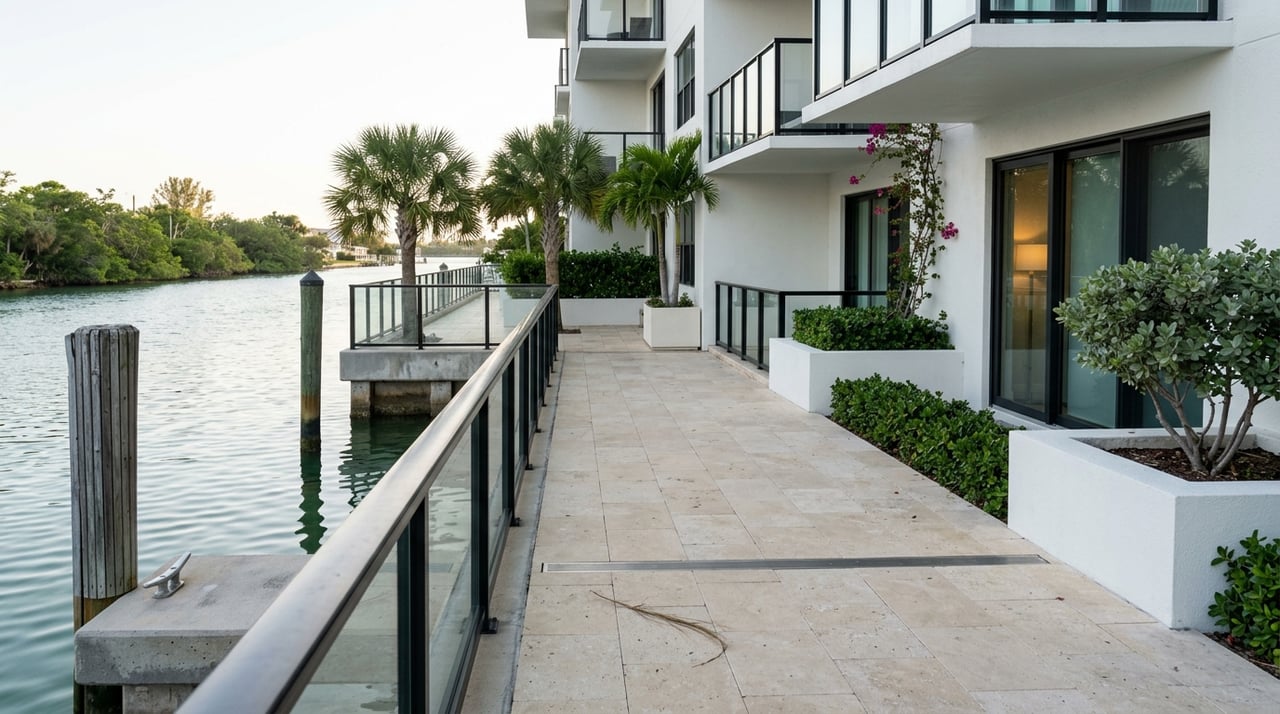
In West Palm Beach, waterfront living usually refers to residences along Flagler Drive and the Intracoastal, along with nearby waterfront settings that many buyers also associate with the broader market, including the Town of Palm Beach across the lagoon. The city’s master plan describes the Flagler Waterfront as a scenic Intracoastal district with green open space, high-rise condominiums, and office towers.
Waterfront living typically feels more open and scenic than downtown. Instead of being centered on density and nightlife, it is more often about water views, outdoor recreation, and a calmer day-to-day setting.
One of the biggest draws of the waterfront is the setting itself. The city describes the waterfront as stretching along the Intracoastal Waterway from the southeastern to northern limits of West Palm Beach, with its epicenter at Clematis Street, and notes that Waterfront Commons is designed with walking paths, shade, and gathering space.
That creates a different rhythm from downtown. You may trade some restaurant density and urban buzz for broader views, more green space, and a stronger connection to the water.
If boating and water access matter to you, waterfront living has a clear edge. The city’s downtown waterfront docks offer free first-come, first-served access for non-commercial boats from 5 a.m. to midnight, and the city also points to nearby jet ski, paddleboard, and kayak rentals, plus catamaran cruises.
The broader waterway is also a major lifestyle asset. Visit Palm Beach describes Lake Worth Lagoon as a 20-mile urban estuary used for kayaking, boating, fishing, birdwatching, diving, and waterfront dining.
Waterfront housing is more varied. In some areas, you will find high-rise condominiums, while in others you will see established residential streets with historic homes and a more traditional neighborhood feel.
For example, the city identifies Providencia Park as a residential waterfront neighborhood with historic single-family homes. Across the lagoon, the Town of Palm Beach is known for a long architectural legacy that includes bungalow, Mediterranean Revival, British Colonial, Monterey, and Mission Revival styles, according to the planning documents referenced in the city’s master plan.
Choosing between downtown and waterfront living usually comes down to how you rank convenience, scenery, recreation, and housing type. Both can offer a strong West Palm Beach lifestyle, but they serve different priorities.
Downtown has the advantage if you want the broadest concentration of restaurants, shops, and arts venues nearby. It is the city’s clearest center for entertainment, and it also hosts recurring public events like Clematis by Night, the long-running free concert series held Thursdays from 6 to 9 p.m. on the waterfront.
Waterfront areas can still place you close to downtown amenities, especially near Flagler Drive. Still, the overall experience is less about density and more about setting.
If your version of walkability means being able to step outside and have multiple dining, shopping, and cultural options close by, downtown is the stronger choice. The city’s planning framework clearly centers those uses around downtown’s core streets and mixed-use districts.
If your ideal daily routine includes walking along the water, enjoying open views, and spending more time around green space, the waterfront may feel more natural. It is walkable in a different way, with more emphasis on scenery than concentration.
Downtown is the practical winner for transit access. Between Tri-Rail, Palm Tran, Circuit, Amtrak connections, Greyhound access, and the trolley network, it has the strongest transportation web in the area.
Waterfront homes still benefit from being near downtown, but their identity is not built around transit. The city’s planning documents place the most robust rail and shuttle network inland, with strong pedestrian links connecting the core to the water.
If you are specifically looking for a low-maintenance condo lifestyle, downtown stands out. It is the city’s clearest vertical-living market, with multifamily and mixed-use residential playing a major role.
If you want more variety, the waterfront often gives you more to compare. Depending on the exact location, that can mean a high-rise condo, a historic single-family home, or a property where views and frontage drive more of the appeal.
Citywide and townwide housing figures help explain why downtown and waterfront living can feel like different markets. According to U.S. Census QuickFacts for West Palm Beach, the city has a median household income of $73,446, a median gross rent of $1,772, an owner-occupied housing rate of 50.2%, and a median value of owner-occupied homes of $369,800.
In Palm Beach, the same QuickFacts source shows an owner-occupied housing rate of 83.7% and a median owner-occupied home value of more than $2,000,000. These figures are not neighborhood-specific, but they help illustrate why waterfront choices, especially those tied to Palm Beach, often operate in a very different pricing environment.
Downtown West Palm Beach may be the better fit if you want:
Waterfront living may be the better fit if you want:
In the end, neither option is universally better. The better choice is the one that matches how you actually want to live, whether that means coffee and concerts within a few blocks or sunrise views and easier access to the Intracoastal.
If you are comparing neighborhoods, condo options, or waterfront properties in Palm Beach County, Kevin Keogh, Lighthouse Realty Group, Inc can help you narrow the search with local insight and a concierge-level approach.

Get assistance in determining the current property value, crafting a competitive offer, writing and negotiating a contract, and much more. Contact us today.