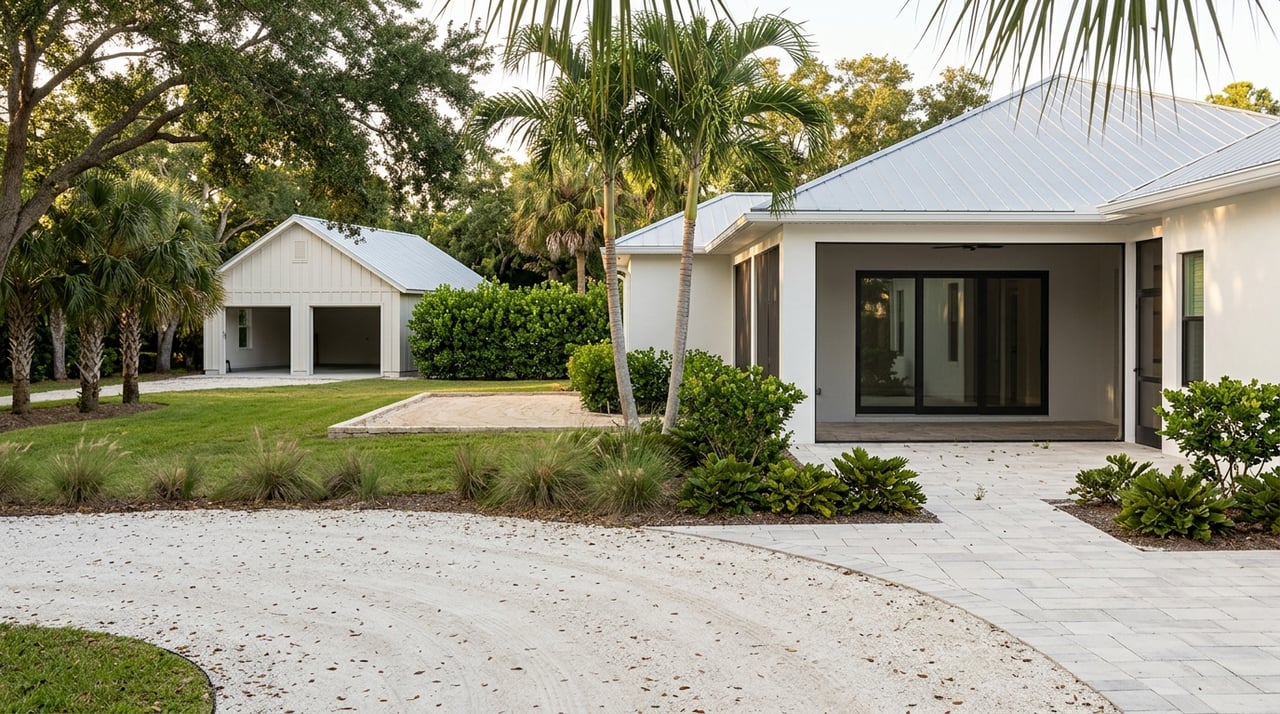
Acreage And Outdoor Living In Jupiter Farms
If you have ever wished for more room to spread out without leaving northern Palm Beach County, Jupiter Farms probably keeps showing up on your radar. Many buyers are drawn to the idea of acreage, privacy, and outdoor living, but they also want a clear picture of what daily life really feels like. In Jupiter Farms, the appeal is real, and so are the trade-offs. Let’s dive in.
Jupiter Farms sits in the northernmost part of Palm Beach County, west of Florida's Turnpike. According to Census QuickFacts and county planning data, the community has 12,572 residents across 15.08 land square miles, with a population density of 833.6 people per square mile.
That lower density helps explain why the area feels so different from in-town Jupiter. For comparison, Jupiter town had 61,047 residents in 2020 and about 4,600 people per square mile, which makes Jupiter town roughly 5.5 times denser than Jupiter Farms. If you are deciding between the two, that is one of the clearest ways to understand the lifestyle shift.
Jupiter Farms also has a strongly owner-occupied feel. County planning data notes a 97.3% owner-occupied housing rate, which supports the sense that many properties are long-term homes rather than short-term stops.
In Jupiter Farms, land is not just a feature. It is part of the area's identity. The county's Jupiter Farms Neighborhood Plan describes the community as low density, with about 1 unit per 1.25 acres at buildout.
The lot pattern is also more varied than what you would see in a typical subdivision. The county plan shows parcels ranging from about 2.5 to 5 acres, 5 to 10 acres, and 10-plus acres. That mix creates a more custom, less uniform feel from one property to the next.
For buyers, this usually means you are not simply comparing house size or finishes. You are also thinking about how you want to use the land, how much privacy you want, and whether outdoor space matters as much as the home itself.
One of the biggest reasons people consider Jupiter Farms is flexibility. Based on the county's lot and use framework, the area often reads more like detached custom homes on acreage than a conventional suburban tract.
That setup can support a wider range of outdoor living features, depending on the specific property and approvals. Buyers often picture space for barns, workshops, pools, sheds, and other outbuildings because the parcel pattern and zoning framework allow for more breathing room than many in-town neighborhoods.
The county planning language also describes Jupiter Farms as a place for horses, pets, farm animals, and crops. That helps explain why the community is often viewed as semi-rural rather than purely residential.
If you are looking at Jupiter Farms, it is smart to pay attention to allowed uses and any added review that may apply. The county plan lists single-family homes, bona fide agriculture, home occupations, and private stables as permitted uses in the AR district.
It also identifies accessory dwellings, private kennels, commercial stables, equestrian arenas, schools, and public parks among uses that can be allowed through additional review. In practical terms, that means some properties may offer more flexibility than buyers expect, but the details still matter on a case-by-case basis.
County zoning FAQs also describe a business run from home as a home occupation. If you want a property where you can combine residential living with a home-based work setup, Jupiter Farms may offer options worth exploring.
In some communities, horse-friendly living is more of an image than a reality. In Jupiter Farms, there is actual public infrastructure that supports it.
Jupiter Farms Park is a 56.48-acre county park with baseball fields, a playground, picnic space, and restrooms. It also includes a public equestrian facility with sand, grass, and warm-up arenas, plus horse trailer parking. The equestrian area is open to the public except during special events.
That matters if you want more than land alone. A horse-friendly home can be more useful when it is backed by places to ride, train, or gather nearby.
The surrounding trail system is another reason outdoor-minded buyers take a close look at Jupiter Farms. County trails include the Cypress Creek/Jupiter Ranch Tract, which has 1.2 miles of equestrian trails accessible from Jupiter Farms Road and Indiantown Road.
Riverbend Park expands those options even further. It offers nearly 10 miles of hiking and biking trails, 7 miles of equestrian trails, and 5 miles of canoeing and kayaking trails.
The county's neighborhood plan also recommends bridle, bicycle, and equestrian movement along Jupiter Farms Road. That is a useful clue that outdoor mobility is part of the area's intended character, not just a side benefit.
Acreage living usually comes with compromises, and Jupiter Farms is no exception. The core trade-off is straightforward: you gain more land, more privacy, and more outdoor-use potential, but you give up some of the convenience density you find in Jupiter town.
Utilities are a good example. Jupiter town's infrastructure plan says the town coordinates its water utility and prohibits septic tanks within town limits. In contrast, the Jupiter Farms neighborhood plan describes residents drawing water from the surficial aquifer and using septic tanks.
That difference helps explain why Jupiter Farms can feel more self-managed and less infrastructure-dense. For some buyers, that is part of the appeal. For others, it is an adjustment that should be understood before making a move.
Commute patterns also tell part of the story. Census data shows a mean travel time to work of 30.8 minutes in Jupiter Farms versus 24.9 minutes in Jupiter town.
That 5.9-minute difference may not sound dramatic at first, but it reflects the broader reality of acreage living. You are often trading quick access and denser services for more space and a quieter setting.
Even neighborhood amenities reinforce that point. Jupiter Farms Elementary is located on Haynie Lane, and the school's directions note access west from I-95 via the Indiantown West exit, which underscores how car-oriented the area is.
Jupiter Farms tends to make the most sense for buyers who value space as part of their daily lifestyle, not just as a nice extra. If you want room for outdoor entertaining, hobby use, animals, gardening, or simply more distance between homes, the community offers a setting that is harder to find closer to the coast.
It can also appeal to buyers who want a custom-home feel and less of a uniform neighborhood layout. The varied parcel sizes and county land-use framework support a more individualized environment.
On the other hand, if your top priorities are shorter commutes, centralized utilities, and a more municipal feel, in-town Jupiter may be a better fit. Neither choice is better in every situation. It depends on how you want to live day to day.
When you tour homes in Jupiter Farms, look beyond the house itself. The land, use potential, and day-to-day logistics are often just as important as interior finishes.
A few smart questions to ask include:
This kind of property search usually benefits from local guidance. Two homes with similar square footage can feel very different when acreage, access, and allowed uses enter the picture.
If you are thinking about buying or selling in Jupiter Farms, a local, property-specific strategy matters. Kevin Keogh, Lighthouse Realty Group, Inc offers the kind of hands-on market insight and personalized guidance that can help you evaluate acreage living with clarity and confidence.

Get assistance in determining the current property value, crafting a competitive offer, writing and negotiating a contract, and much more. Contact us today.